
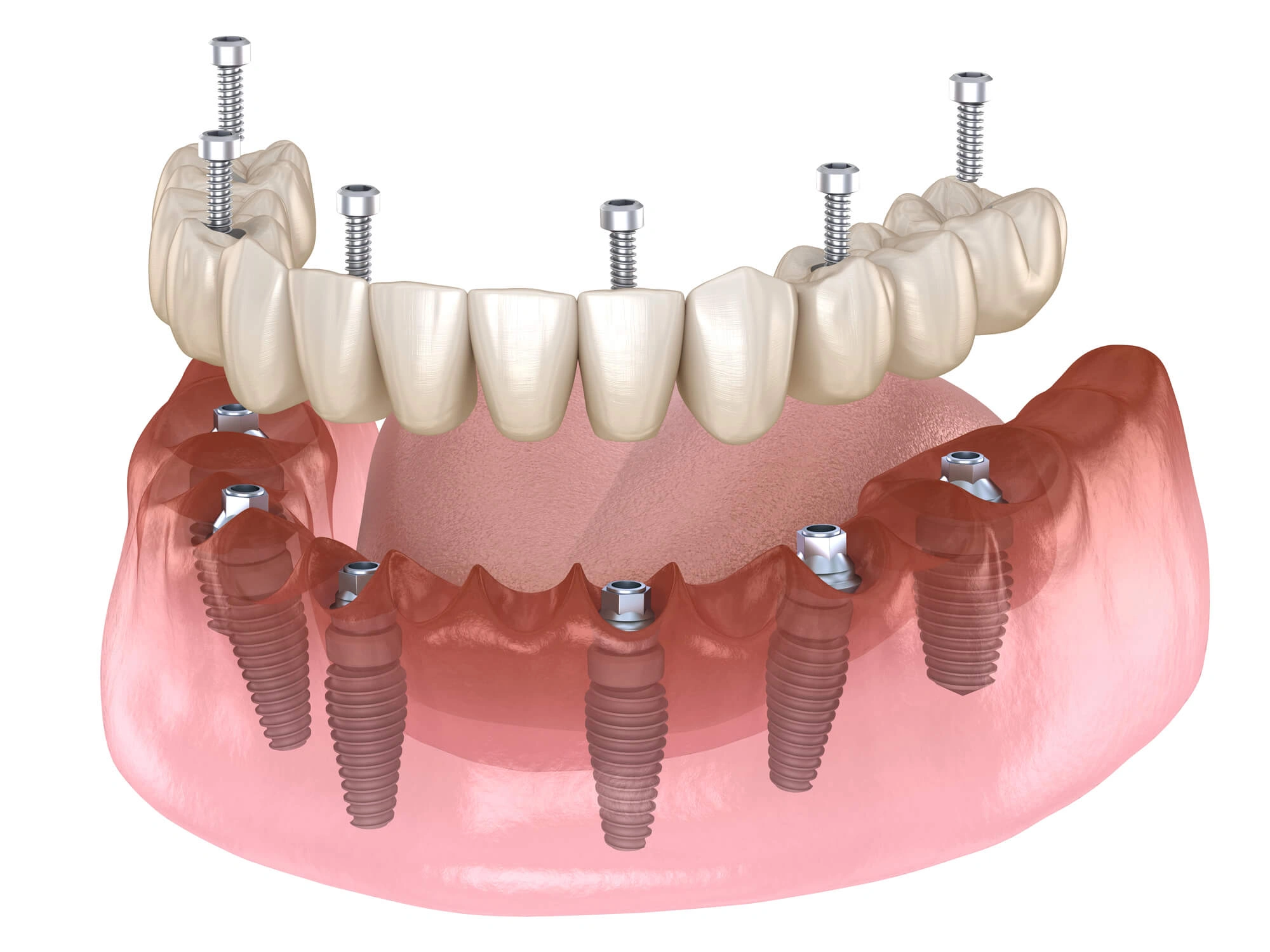
Many patients assume that All-on-X dental implants are designed to function like a permanent, maintenance-free solution once placed. While these implants are highly durable and engineered for long-term stability, their success still depends heavily on daily care and long-term maintenance habits.
What often surprises patients is that implants don’t fail because of the material itself—they fail because of what happens around them over time. Gum health, cleaning habits, bite pressure, and routine monitoring all play a role in how long they last. Even small oversights can slowly influence comfort and stability without obvious early warning signs.

Common All-on-X Dental Implant Care Mistakes
Mistake #1 — Assuming Implants Don’t Need Daily Cleaning
The myth of “artificial teeth don’t decay” often leads patients to underestimate the importance of oral hygiene. While implants themselves cannot develop cavities, the surrounding gum tissue remains vulnerable to inflammation and infection. Healthy gum tissue helps create a stable seal around the implant and supports long-term function.
Plaque buildup can still accumulate around implant-supported restorations and contribute to peri-implant disease if not removed consistently. Bacterial accumulation around implants often develops gradually, making early prevention especially important.
Brushing, flossing, and using recommended cleaning tools help maintain a healthy environment around the implant structure. Following the cleaning routine recommended by your provider can help target areas that standard brushing may miss.
Mistake #2 — Ignoring Hard-to-Reach Cleaning Areas
One of the most overlooked areas is underneath the fixed bridge, where food particles and bacteria can accumulate. These hidden spaces often require specialized cleaning tools because they are not fully accessible with a standard toothbrush.
Water flossers and interdental brushes are commonly recommended, but incorrect or inconsistent use reduces their effectiveness. Using these tools properly can help remove debris before it has an opportunity to irritate the surrounding tissue.
A simple routine done daily is far more effective than occasional deep cleaning efforts. Consistent maintenance helps prevent small deposits from becoming more difficult to remove over time.
Mistake #3 — Skipping Professional Maintenance Visits
Even when implants feel perfectly fine, routine dental visits help ensure everything remains stable over time. Many implant-related issues develop without noticeable symptoms during the early stages.
Dentists check for early signs of inflammation, mechanical stress, and changes in bone or gum levels that are not visible to patients. Professional evaluations provide a level of monitoring that cannot be replicated through at-home care alone.
Early intervention can prevent minor concerns from developing into more serious complications. Addressing concerns early is often less complex than waiting until symptoms become obvious.
Mistake #4 — Treating All Foods as “Safe” After Healing
Even after full healing, excessive force from certain foods can place unnecessary stress on the prosthesis. Repeated exposure to extremely hard foods may contribute to premature wear on restorative materials.
Unlike natural teeth, implants do not have a ligament cushion, meaning force is transferred more directly to the structure. This makes force management an important part of protecting the restoration over the long term.
Balanced eating habits help protect both the implant and the surrounding components over time. Being mindful of chewing habits can help reduce concentrated pressure on specific areas.
Mistake #5 — Grinding or Clenching Without Protection
Teeth grinding or clenching during sleep can place significant pressure on implant-supported restorations. This pressure often occurs for hours at a time without the patient realizing it.
A custom night guard helps absorb pressure and protect the prosthesis from long-term wear. Night guards can also help reduce strain on jaw muscles and surrounding structures.
Morning jaw soreness or subtle wear patterns can indicate nighttime grinding. Recognizing these warning signs early allows patients to seek intervention before damage progresses.
Mistake #6 — Ignoring Gum Health Around Implants
Healthy gums are essential for protecting the implant and maintaining stability. The condition of the surrounding tissue directly affects the long-term health of the implant site.
Redness, swelling, or bleeding can indicate early inflammation that should not be ignored. Prompt evaluation of these symptoms can help prevent more advanced tissue complications.
Strong gum health creates a protective barrier around the implant. Maintaining healthy tissue also supports easier cleaning and daily maintenance.
Mistake #7 — Assuming Stability Means No Future Risk
Even though implants are strong, they are not immune to wear, bacteria, or mechanical stress. Long-term success depends on ongoing care rather than the implant itself being indestructible.
Regular assessments ensure that changes are detected early and managed appropriately. Routine monitoring helps identify subtle changes that may not be visible or noticeable to patients.
Preventive care is more effective than corrective treatment after a problem develops. Small preventive measures today can help avoid larger restorative needs in the future.
Before, During, and After All-on-X Dental Implant Care
Before Treatment
The process begins with consultation, imaging, and treatment planning to determine candidacy and design the implant approach. Sedation options may also be reviewed for patient comfort. This stage helps ensure expectations are aligned with clinical reality before any procedure begins.
During Placement
The procedure is performed under anesthesia or sedation, allowing patients to remain comfortable while implants are precisely placed. Careful planning during surgery helps ensure even distribution of bite forces across the final restoration.
After Placement
Healing begins immediately and continues over several months as the implants integrate with bone. Daily care and follow-up visits are essential. This phase is where long-term success is truly established through consistent patient habits.
Frequently Asked Questions About All-on-X Dental Implants
How long do All-on-X implants last?
With proper care, maintenance, and regular dental visits, they can last many years and often decades.
Do All-on-X implants require special cleaning?
Yes. Specialized tools like water flossers and interdental brushes help clean under the prosthesis effectively.
Can All-on-X implants fail?
While rare, failure can occur due to infection, poor hygiene, or excessive bite pressure.
Are All-on-X implants hard to maintain?
They are not difficult to maintain, but they do require daily consistency and proper technique.
Do I still need dental visits after implants?
Yes. Regular professional maintenance is essential for long-term success and early issue detection.
What Patients Should Know About Long-Term Care
Successful All-on-X dental implants depend not only on placement but also on long-term maintenance habits. Daily cleaning, balanced bite forces, and routine dental visits all contribute to preserving stability and function over time. Small, consistent efforts make the biggest difference in long-term outcomes.

Talk to Our Team About All-on-X Dental Implants and Long-Term Maintenance Support
At Georgetown Sedation Dentistry, we understand that learning how to care for All-on-X implants can feel overwhelming at first. Our team is here to guide you through proper maintenance, answer your questions, and support you in protecting your long-term results.
If you’re considering treatment or want to better understand ongoing care, we encourage you to reach out today. We’re here to help you feel confident and informed every step of the way.

150 Mt Vernon Dr, Georgetown, KY 40324 Suite 201
Monday 8 AM - 5 PM
Tuesday 8 AM - 5 PM
Wednesday CLOSED
Thursday 8 AM - 5 PM
Friday 8 AM - 5 PM
Saturday CLOSED
Sunday CLOSED

.svg)
.svg)
.svg)
.svg)
© 2024. Georgetown Sedation Dentistry | Privacy Policy | ADA Compliance
Website by: Digital Resource