

Missing most or all of your teeth can affect more than your smile. It may make chewing difficult, limit the foods you enjoy, and impact your confidence. Full-arch implants are designed to restore both function and appearance with a stable, long-term solution.
If you're considering full-arch implants, you may be wondering whether you'll be able to bite and chew normally again. While every patient is different, implant-supported restorations are designed to provide a secure foundation for everyday eating and speaking. Here's what you can realistically expect before, during, and after treatment.
What Happens to Your Bite After Tooth Loss?
Missing Teeth Affect More Than Your Smile
Every tooth plays a role in how you chew. When several teeth—or an entire arch—are missing, the balance of your bite changes.
You may notice that it's harder to:
- Chew tougher foods
- Bite into apples or sandwiches
- Eat evenly on both sides of your mouth
- Enjoy foods you once loved
Over time, you may begin favoring one side of your mouth, which can place additional stress on your remaining teeth and jaw.
The Jawbone Changes Too
Natural tooth roots stimulate the jawbone whenever you bite or chew. Once teeth are lost, that stimulation decreases, and the bone may gradually shrink over time.
This is one reason replacing missing teeth sooner rather than later is often recommended. Supporting the jawbone can help preserve the structure needed for long-term oral health.
How Full-Arch Implants Help Restore Your Bite
A Stable Foundation Makes the Difference
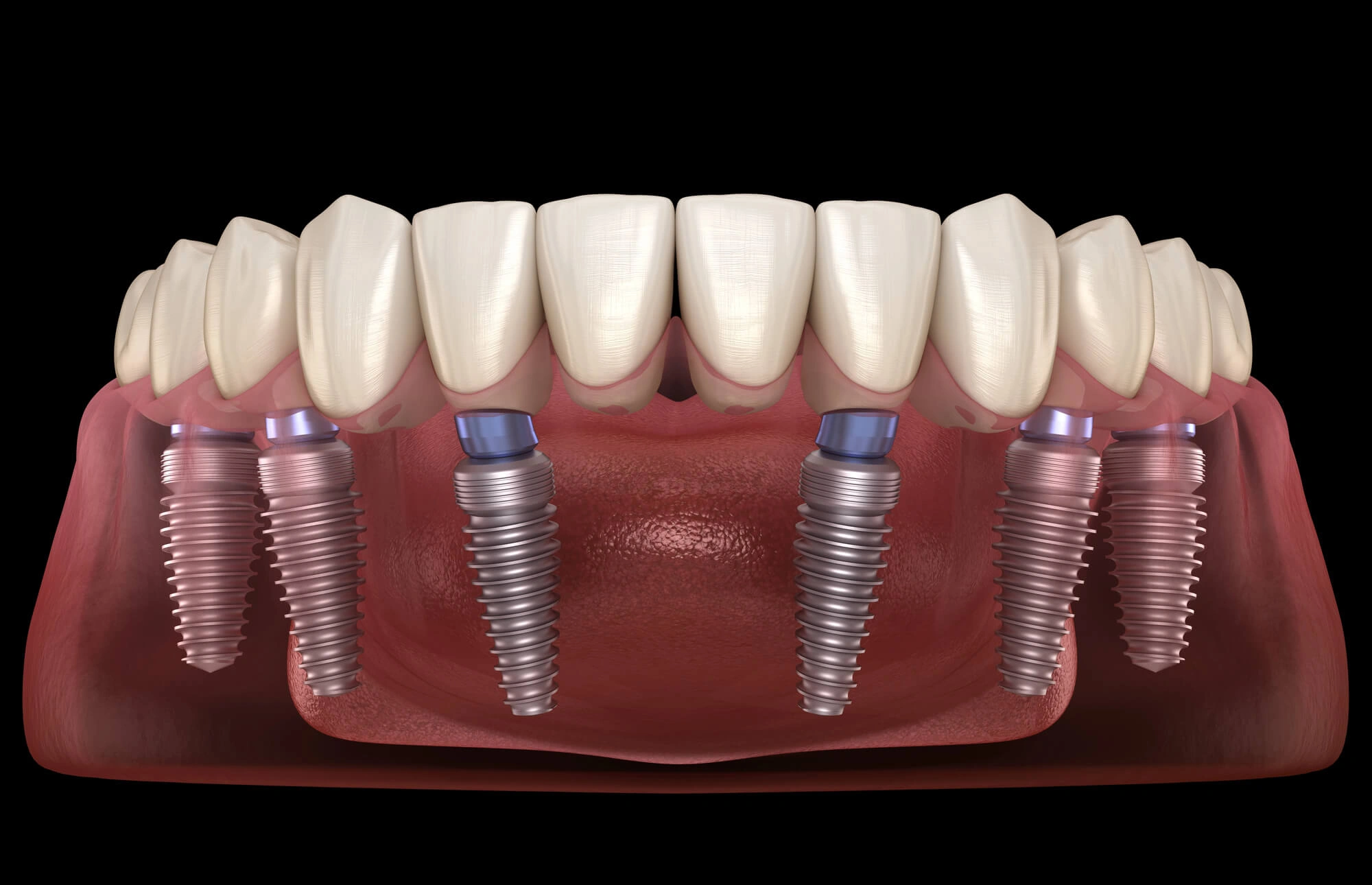
Unlike traditional removable dentures, full-arch implants are anchored directly to the jawbone using dental implants.
This stable foundation helps keep the restoration securely in place while you eat, speak, and smile. Because the restoration doesn't rely solely on the gums for support, many patients experience greater confidence during daily activities.
Chewing Pressure Is Evenly Distributed
Instead of each implant supporting only one tooth, multiple implants work together to support the entire arch of replacement teeth.
This design helps distribute chewing forces more evenly across the implants, creating a balanced bite that feels stable during normal function.
The result is a restoration that's designed to handle the everyday demands of eating while providing dependable support.
Greater Comfort During Everyday Activities
As patients adapt to their new smile, many notice improvements in comfort while eating and speaking.
Although it takes time to become accustomed to any new dental restoration, the stability provided by implant-supported teeth often makes everyday activities feel more natural than they would with removable alternatives.
What Affects How Well Your Bite Recovers?
Healing Is an Important Part of the Process
Dental implants don't become fully stable immediately after they're placed.
Over the following months, the implants gradually bond with the jawbone through a natural process called osseointegration. This healing period creates the strong foundation needed to support normal biting and chewing.
Following Instructions Supports Better Results
Your dentist will provide specific instructions to help your implants heal properly.
These may include:
- Eating soft foods during the early stages of recovery
- Practicing excellent oral hygiene
- Attending follow-up appointments
- Gradually introducing firmer foods as healing progresses
Following these recommendations helps protect your implants while they integrate with the surrounding bone.

Every Patient Heals Differently
Several factors influence recovery, including:
- Bone quality
- Overall health
- Existing oral health conditions
- Smoking or tobacco use
- The complexity of your treatment
Your dentist will monitor your progress and recommend when it's appropriate to resume normal chewing.
What to Expect Before, During, and After Treatment
Before Treatment
Your journey begins with a comprehensive examination, digital imaging, and an evaluation of your bite and jawbone.
Your dentist will explain the treatment process, determine whether full-arch implants are appropriate for your needs, and discuss any additional procedures that may be recommended beforehand.
If you experience dental anxiety, sedation options can also be reviewed during your consultation.
During Implant Surgery
The implants are carefully placed according to your personalized treatment plan.
Local anesthesia helps keep the treatment area comfortable, while sedation dentistry is available for many patients who prefer additional relaxation during the procedure.
Throughout your appointment, your dental team monitors your comfort and answers any questions you may have.
Recovery and Returning to Normal Eating
Healing occurs gradually over several months.
You'll begin with softer foods while the implants integrate with the jawbone. As healing progresses and your dentist confirms everything is recovering properly, you'll slowly return to a wider variety of foods.
Patience during recovery helps support long-term success.
Common Misconceptions About Full-Arch Implants
Myth: You'll Be Able to Eat Anything Immediately
Although the implants provide excellent long-term stability, your jawbone needs time to heal before you return to your regular diet.
Following your dentist's recommendations during recovery is essential.
Myth: Everyone Regains the Same Bite Strength
Every patient has different oral health needs, bone quality, and healing patterns.
Your final results will depend on your individual treatment plan and how well the implants heal.
Myth: Implants Don't Require Maintenance
While implants can't develop cavities, they still require daily brushing, routine professional cleanings, and healthy gums to remain successful over time.
Good oral hygiene is an important part of protecting your investment.
Frequently Asked Questions
Will I Be Able to Eat Steak or Crunchy Foods Again?
Many patients are able to enjoy a wide variety of foods after healing is complete. Your dentist will let you know when it's appropriate to gradually reintroduce firmer foods into your diet.
How Long Does It Take to Regain Normal Chewing Ability?
The timeline varies depending on healing and your treatment plan. Most patients gradually regain chewing function as the implants integrate with the jawbone and the final restoration is placed.
Do Full-Arch Implants Feel Stable While Eating?
Yes. Because the restoration is securely supported by dental implants, it's designed to remain stable during everyday chewing and speaking.
Is Sedation Available During Implant Surgery?
Yes. Many patients choose sedation dentistry to help them feel more comfortable and relaxed during implant placement. Your dentist will recommend the option that's most appropriate for your needs.

Considering Full-Arch Implants? Georgetown Sedation Dentistry Can Help Restore Your Smile
At Georgetown Sedation Dentistry, every full-arch implant treatment starts with a thorough evaluation of your oral health, jawbone, and bite. We'll determine whether you're a good candidate, create a personalized treatment plan, and explain every step of the process.
If you're concerned about surgery, we also offer sedation options to help you stay comfortable. Contact us today to schedule a consultation and learn whether full-arch implants are right for your smile.

150 Mt Vernon Dr, Georgetown, KY 40324 Suite 201
Monday 8 AM - 5 PM
Tuesday 8 AM - 5 PM
Wednesday CLOSED
Thursday 8 AM - 5 PM
Friday 8 AM - 5 PM
Saturday CLOSED
Sunday CLOSED

.svg)
.svg)
.svg)
.svg)
© 2024. Georgetown Sedation Dentistry | Privacy Policy | ADA Compliance
Website by: Digital Resource