

If you’ve been researching all-on-x dental implants, you’ve probably wondered what the “X” actually means. Is it four implants? Six? Eight? And how does your dentist decide?
The truth is, the “X” in All-on-x isn’t just a number—it represents a customized approach to full-arch tooth replacement. While many people are familiar with the term All-on-4®, the reality is that the number of implants used can vary depending on your anatomy, bone density, and long-term goals.
Let’s break down what that number really means and why it matters.
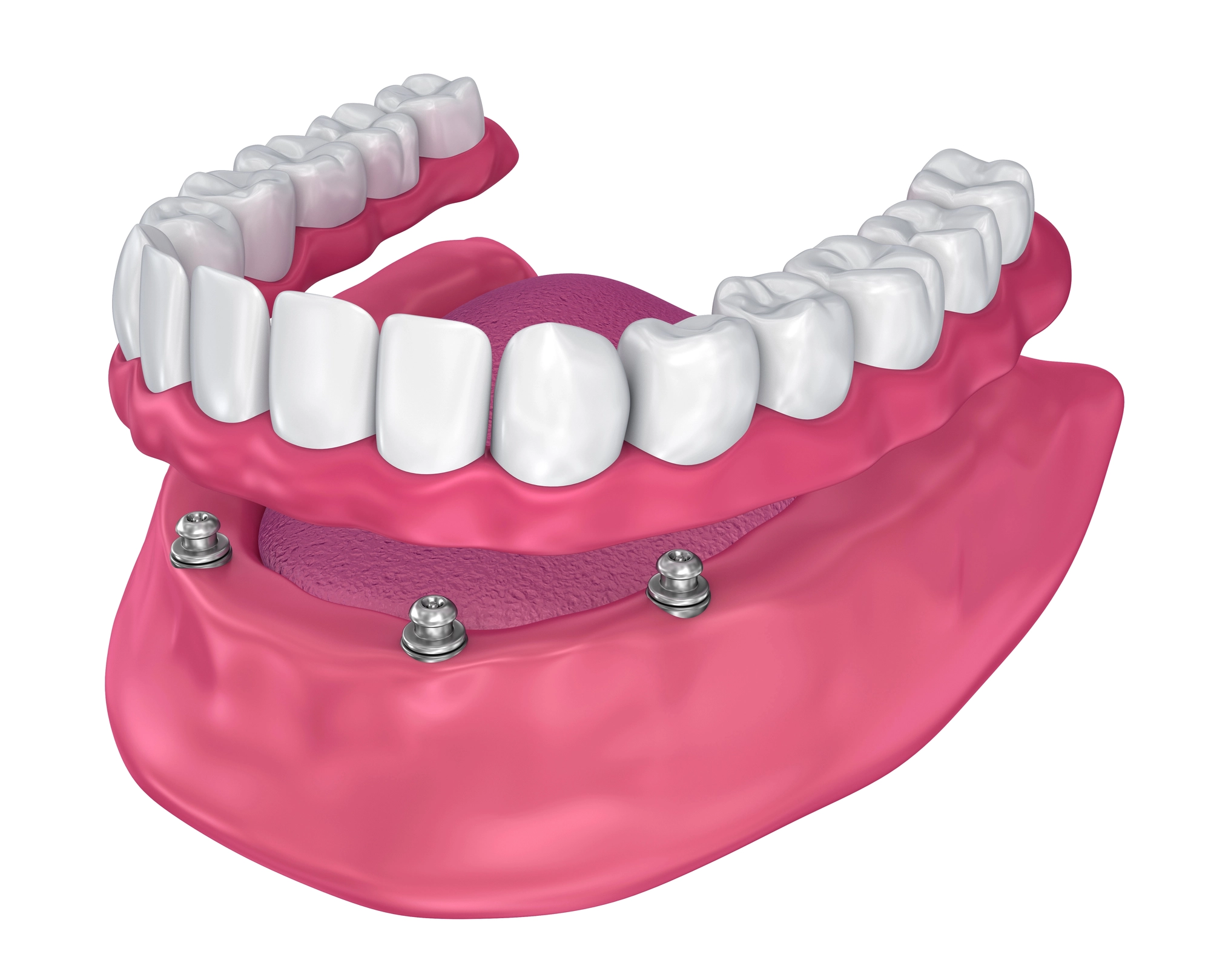
What Are All-on-X Dental Implants?
All-on-x dental implants are a full-arch restoration solution designed to replace an entire upper or lower set of teeth using a limited number of strategically placed implants.
Instead of placing one implant per missing tooth, dentists place several implants in the jawbone to anchor a fixed prosthetic arch. This approach provides:
- Stability
- Improved chewing function
- Long-term bone preservation
- A natural-looking smile
The innovation behind this method is efficiency. By strategically angling and positioning implants, dentists can maximize support while minimizing the number of implants needed.
But how many is enough?
The Most Common Number: All-on-4®
All-on-4® is the most widely recognized version of this treatment. As the name suggests, it uses four implants to support a full arch of teeth.
Here’s how it works:
- Two implants are placed vertically in the front of the jaw
- Two implants are angled in the back to maximize contact with available bone
Angling the posterior implants allows providers to avoid anatomical structures such as sinuses (upper jaw) and major nerves (lower jaw) while increasing stability.
For many patients, four implants provide sufficient support for a full-arch prosthesis, especially when bone density is strong in the front portion of the jaw.
However, four isn’t always ideal for every patient.
When the “X” Becomes 5 or 6
In many cases, dentists may recommend five or six implants instead of four. This is where the term “all-on-X dental implants” becomes especially important—because the number is personalized.
Why would someone need more than four?
Bone Density Variations
Not all jaws have the same bone volume. If bone quality is reduced, adding an extra implant can distribute pressure more evenly and reduce strain.
Bite Force
Patients with strong bite forces or a history of grinding (bruxism) may benefit from additional implants to improve durability.
Long-Term Stability
More implants can provide long-term structural support, especially for younger patients who want maximum longevity from their restoration.
Six implants often provide:
- Increased arch stability
- Better load distribution
- Reduced stress on individual implant posts
While four implants may work beautifully for many, adding one or two more can enhance overall security.
What About 7 or 8 Implants?
In certain complex cases, providers may place seven or even eight implants for a full arch.
This is more common when:
- Bone grafting has been performed
- The patient desires maximum redundancy
- The jawbone allows for additional placement
- The restoration material is heavier (such as zirconia)
While more implants can offer added strength, there’s a point of diminishing returns. The goal isn’t simply “more is better.” Instead, it’s about finding the ideal balance between stability, surgical efficiency, healing time, and long-term function.
A skilled implant provider carefully evaluates whether additional implants truly improve the outcome, or simply increase cost and surgical complexity unnecessarily.

Upper vs. Lower Arch: Does It Change the Number?
Yes, significantly.
The upper jaw (maxilla) typically has softer bone than the lower jaw (mandible). Because of this:
- Upper arches often require more implants
- Lower arches may function well with fewer
The sinus cavities in the upper jaw also limit placement options. Strategic angling and careful planning are essential.
This is why a comprehensive evaluation, often including 3D imaging, is critical before determining the final “X” in all-on-X dental implants.
How Dentists Decide the Right Number
Choosing the correct number of implants is not arbitrary. It’s based on several clinical factors:
1. Bone Quality and Volume
A 3D cone beam CT scan allows providers to measure bone height, width, and density.
2. Medical History
Conditions like osteoporosis or uncontrolled diabetes may influence implant strategy.
3. Jaw Anatomy
Sinuses, nerves, and natural bone contours must be accounted for.
4. Prosthetic Design
The material and design of the final arch restoration affect how many implants are needed for support.
5. Patient Goals
Some patients prioritize cost efficiency. Others want maximum long-term reinforcement. Treatment is tailored accordingly.
The “X” is ultimately determined through detailed planning, not guesswork.
Is More Always Better?
It’s a common assumption: more implants must mean a stronger result. But that isn’t always true.
Each implant requires:
- Surgical placement
- Healing time
- Investment
- Bone integration
Placing unnecessary implants can increase surgical trauma and recovery time without significantly improving function.
The key is strategic placement. A well-planned four-implant case may outperform a poorly positioned six-implant case.
In implant dentistry, precision matters more than quantity.
The Importance of Customization
One of the biggest advantages of all-on-X dental implants is flexibility. Instead of a one-size-fits-all solution, treatment is individualized.
Modern implant planning uses:
- Digital impressions
- 3D imaging
- Guided surgical templates
- Bite analysis
This technology allows providers to simulate implant placement before surgery even begins.
The result? A predictable, efficient procedure designed around your anatomy, not a predetermined number.
What This Means for You
If you’re considering full-arch restoration, don’t get too focused on the number alone. The real question isn’t “How many implants will I get?”
It’s: “What number will give me the most stable, long-lasting result?”
Whether your treatment involves four, five, six, or more implants, the goal remains the same:
- Restore function
- Preserve jawbone health
- Provide natural aesthetics
- Deliver long-term durability
The “X” simply reflects a personalized approach to achieving that outcome.

Want to Learn More About All-on-X Dental Implants?
The phrase all-on-X dental implants represents more than a marketing term—it reflects the adaptability of modern implant dentistry.
While All-on-4® remains a popular option, many patients benefit from additional implants depending on their bone structure, bite force, and long-term goals. The right number is determined through comprehensive evaluation and careful planning.
Full-arch dental implants are a significant investment in your health and confidence. Understanding what goes into that “X” helps you make informed decisions and ask the right questions during your consultation.
When done correctly, the number becomes secondary—because the real success lies in thoughtful design, surgical precision, and a restoration built to last.
If you’re considering all-on-x dental implants, the best next step is a personalized consultation. A comprehensive evaluation can determine the ideal number of implants for your anatomy and long-term goals. Schedule your appointment today to learn what your “X” should be for a stable, confident smile.
*Nobel Biocare, NobelProcera, NobelGuide and All-on-4 are trademarks of the Nobel Biocare group

150 Mt Vernon Dr, Georgetown, KY 40324 Suite 201
Monday 8 AM - 5 PM
Tuesday 8 AM - 5 PM
Wednesday CLOSED
Thursday 8 AM - 5 PM
Friday 8 AM - 5 PM
Saturday CLOSED
Sunday CLOSED

.svg)
.svg)
.svg)
.svg)
© 2024. Georgetown Sedation Dentistry | Privacy Policy | ADA Compliance
Website by: Digital Resource