
If you’ve been told you may need a full mouth reconstruction, you might feel overwhelmed. The phrase alone sounds extensive—and it is. Full mouth reconstruction involves rebuilding or replacing most (or all) of the teeth in the upper and lower jaws to restore function, health, and aesthetics.
But here’s what many patients don’t realize: Modern dental technology has completely transformed the process.
What once required lengthy timelines, uncomfortable impressions, and less predictable results is now more precise, efficient, and comfortable than ever before. Today, advanced tools allow dentists to plan with extraordinary accuracy and deliver life-changing results with confidence.
Let’s explore how technology enhances every stage of full mouth reconstruction and why that matters for your outcome.
What Is Full Mouth Reconstruction?
Full mouth reconstruction is a customized treatment plan designed to restore:
- Severely worn teeth
- Multiple missing teeth
- Advanced decay
- Bite misalignment
- Jaw discomfort or TMJ issues
Unlike cosmetic smile makeovers, full mouth reconstruction focuses first on restoring health and function—aesthetics follow naturally.
Because it often combines procedures like crowns, bridges, implants, and sometimes orthodontics, precision is essential. That’s where modern technology makes a dramatic difference.
Technology Used During Your Full Mouth Makeover
3D Imaging: Seeing the Full Picture
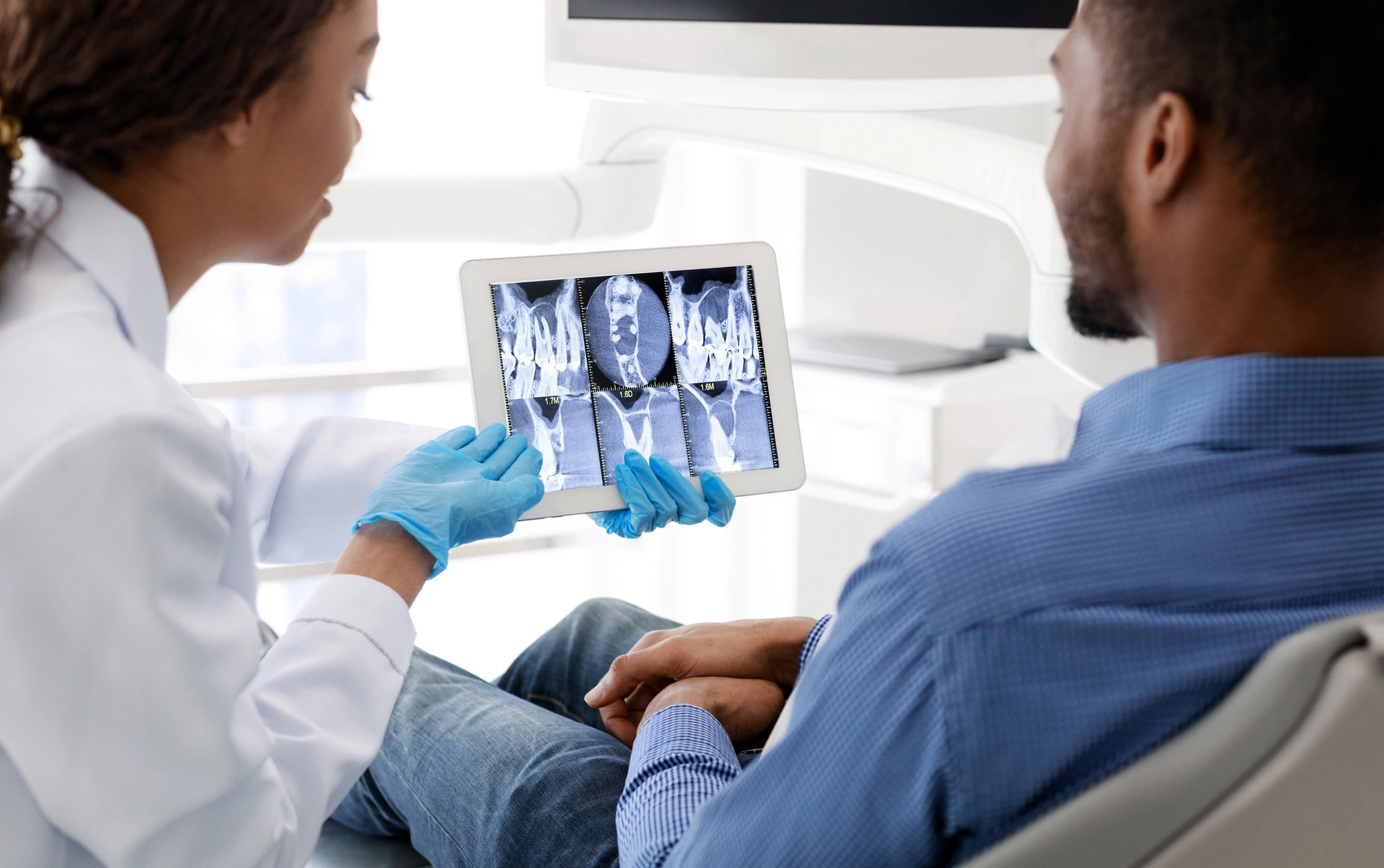
One of the most important tools in modern dentistry is 3D cone beam imaging.
Traditional X-rays show two-dimensional images. Cone beam CT scans, however, create a three-dimensional view of:
- Bone density
- Nerve pathways
- Sinus cavities
- Jaw structure
- Existing restorations
For patients undergoing full mouth reconstruction, this level of detail allows for highly accurate planning, especially when dental implants are involved.
Instead of estimating bone availability, your provider can measure it precisely. This reduces surgical risks and improves long-term stability.
Better visibility leads to better outcomes.
Digital Smile Design: Previewing Your Results
One of the most exciting advancements in dentistry is digital smile design.
Using advanced imaging and software, your dentist can:
- Analyze facial symmetry
- Evaluate bite alignment
- Simulate final restorations
- Show you a preview of potential results
For many patients, seeing a projected outcome builds confidence and eliminates uncertainty.
Full mouth reconstruction is a significant investment — emotionally and financially. Technology allows you to move forward knowing what your future smile will look like before treatment even begins.
Digital Impressions: No More Messy Molds
If you’ve ever had traditional dental impressions taken, you may remember bulky trays and uncomfortable materials.
Modern practices now use intraoral scanners to capture highly accurate digital impressions. These scanners:
- Create precise 3D models
- Reduce discomfort
- Improve restoration fit
- Speed up turnaround times
For complex cases like full mouth reconstruction, accuracy is critical. Even slight errors in impressions can affect bite alignment and comfort.
Digital scanning dramatically reduces that margin for error.
CAD/CAM Technology: Precision-Crafted Restorations
Computer-Aided Design and Computer-Aided Manufacturing (CAD/CAM) technology allows restorations to be digitally designed and fabricated with incredible precision.
Crowns, bridges, and implant restorations can be:
- Designed to exact specifications
- Milled from durable materials
- Matched to your natural tooth shade
- Adjusted digitally before placement
For patients undergoing full mouth reconstruction, this means:
- Better-fitting restorations
- Fewer adjustments
- Improved comfort
- Long-lasting durability
Precision engineering reduces guesswork and increases predictability.
Guided Implant Surgery: Accuracy Matters
Many full mouth reconstruction cases involve dental implants. Implant placement requires exact positioning to ensure proper bite function and long-term stability.
Guided implant surgery uses digital planning software to:
- Map ideal implant angles
- Avoid nerves and sinuses
- Optimize bone contact
- Improve surgical efficiency
A surgical guide is often created to direct implant placement exactly as planned.
This level of precision:
- Shortens surgery time
- Reduces trauma
- Enhances healing
- Increases success rates
Technology doesn’t replace expertise—it enhances it.
Bite Analysis and Occlusion Technology
Your bite plays a critical role in full mouth reconstruction success.
Modern occlusal analysis tools measure how your teeth come together when you bite and chew. These digital systems can detect:
- High-pressure areas
- Uneven force distribution
- Premature contact points
Why does this matter?
Improper bite alignment can lead to:
- Tooth fractures
- Implant overload
- Jaw pain
- Headaches
- TMJ complications
Technology helps ensure your reconstructed smile isn’t just beautiful — it functions harmoniously.
What Are the Benefits?
Faster Timelines, Fewer Appointments
One of the biggest benefits of modern dental technology is efficiency.
In the past, full mouth reconstruction could require:
- Numerous appointments
- Extended lab turnaround
- Multiple temporary restorations
Today, digital workflows streamline communication between dentists and labs. In some cases, same-day restorations are possible.
While complex cases still require careful staging, technology often reduces total treatment time without compromising quality.
For patients, that means less disruption to daily life.
Improved Patient Comfort
Technology doesn’t just improve outcomes; it enhances comfort.
Advancements allow for:
- Minimally invasive techniques
- Smaller incisions
- Reduced swelling
- Shorter recovery times
Combined with sedation options, patients who once feared extensive dental treatment can now undergo full mouth reconstruction in a controlled, comfortable environment.
Comfort and precision go hand in hand.
Long-Term Predictability
The ultimate goal of full mouth reconstruction is longevity.
Modern dental materials and digital planning tools allow providers to design restorations that:
- Withstand bite forces
- Preserve jawbone health
- Maintain aesthetic integrity
- Function naturally
Technology enables careful planning before irreversible steps are taken. This reduces complications and increases the likelihood of long-term success.
Predictability builds trust, and trust is essential in comprehensive care.
Expertise + Technology: The Ideal Combination
While advanced tools are powerful, they are only as effective as the hands guiding them.
Successful full mouth reconstruction requires:
- Clinical experience
- Advanced training
- Comprehensive diagnosis
- Strategic treatment planning
Technology enhances precision, but it does not replace skill. Instead, it allows experienced providers to deliver more accurate, efficient, and customized results than ever before.
When expertise and innovation work together, patients benefit the most.
Experience How Our Modern Technology Can Help Us with Your Full Mouth Reconstruction
Modern dental technology has transformed what’s possible, making complex restorative cases more predictable, efficient, and patient-centered.
If you’ve been told you need full mouth reconstruction, know that today’s tools allow for a smoother process and highly customized results. A comprehensive consultation can determine the right treatment plan and show you how advanced technology supports every step of your journey.
With the right team and the right technology, rebuilding your smile can feel less overwhelming and far more achievable than you might expect.

150 Mt Vernon Dr, Georgetown, KY 40324 Suite 201
Monday 8 AM - 5 PM
Tuesday 8 AM - 5 PM
Wednesday CLOSED
Thursday 8 AM - 5 PM
Friday 8 AM - 5 PM
Saturday CLOSED
Sunday CLOSED

.svg)
.svg)
.svg)
.svg)
© 2024. Georgetown Sedation Dentistry | Privacy Policy | ADA Compliance
Website by: Digital Resource